

The universe has been pretty rewarding in recent times. I got the opportunity to meet interesting people under interesting circumstances throughout 2024. One such incident was in the beautiful city of Mainz. I was lucky to be a part of the Curious2024 Future Insight Conference where I got the opportunity to interact with bright minds of the past, present and future. I was fortunate to have shared space with Nobel laureates, astronauts, scientists, and pioneers who dared to dream, broke the ceiling and reached for the stars. It was one of the most insightful conferences that I attended and this article is my first attempt at covering a scientific conference.
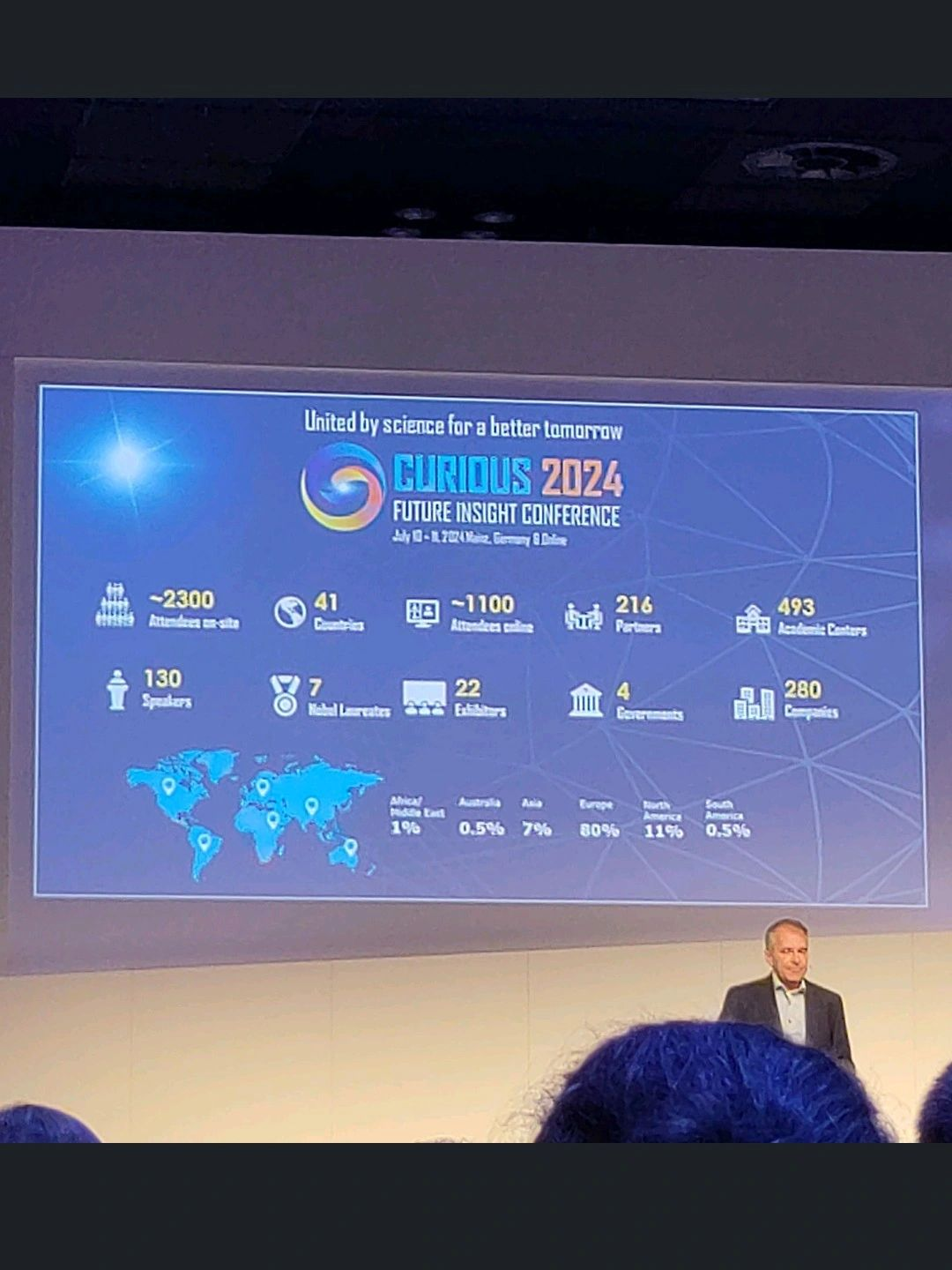
The conference was held July 10-11, 2024. According to the statistics provided by the conference organisers, 3000 people participated including 7 noble laureates and 1 Astronaut. In total, there were 130 speakers. However, I could only attend a handful of the sessions. This article is not a review of the diverse talks but an attempt to reflect upon my experience and understand the global narrative. The themes of the talks in the conference revolved around 4 main topics: Energy, Space, Life and AI and I will summarize some of them here.
AI
I will start with the most popular topic in the modern world i.e. AI. Every event I have been to in past years, there has been at least one talk that focussed on AI, and this event was no exception. From YouTube video recommendations to robotics to cutting-edge biotechnology. In the opening keynote titled The Dawn of Individualized Cancer Medizin, Professor Ugur Sahin emphasises the role of digitization in the medical industry. For those who don’t know, Professor Ugur Sahin is the founder of Bio-N-Tech. The company which made the first Covid-19 mRNA vaccine. He says digitization, especially the usage of AI, is transforming the Bio-tech industry. Starting from the prediction of protein structure to end-end thereauptic practice, the usage of AI is everywhere, and with each passing day, the adoption is just increasing. It was because of technology the first m-RNA COVID-19 vaccine could be brought from the lab to mass manufacture in less than 11 months, and now digitization can help bring down the time required to develop a personalised vaccine to under 6 weeks.
Another interesting talk in the domain of AI was by Dr. Krishna P Gummadi. In his talk titled Towards Fair Social Computing, he talked about the challenges with AI development today. He emphasised two main points. The first one is Lazily engineered AI models, where the right objective of the AI is not defined, the models are not aligned with human thought processes and with the onset of LLMs, sometimes the foundation Models lack the cognitive perspective to explain behaviours. The second challenge is related to system architectures where privacy, accountability and governance are a big source of debate.
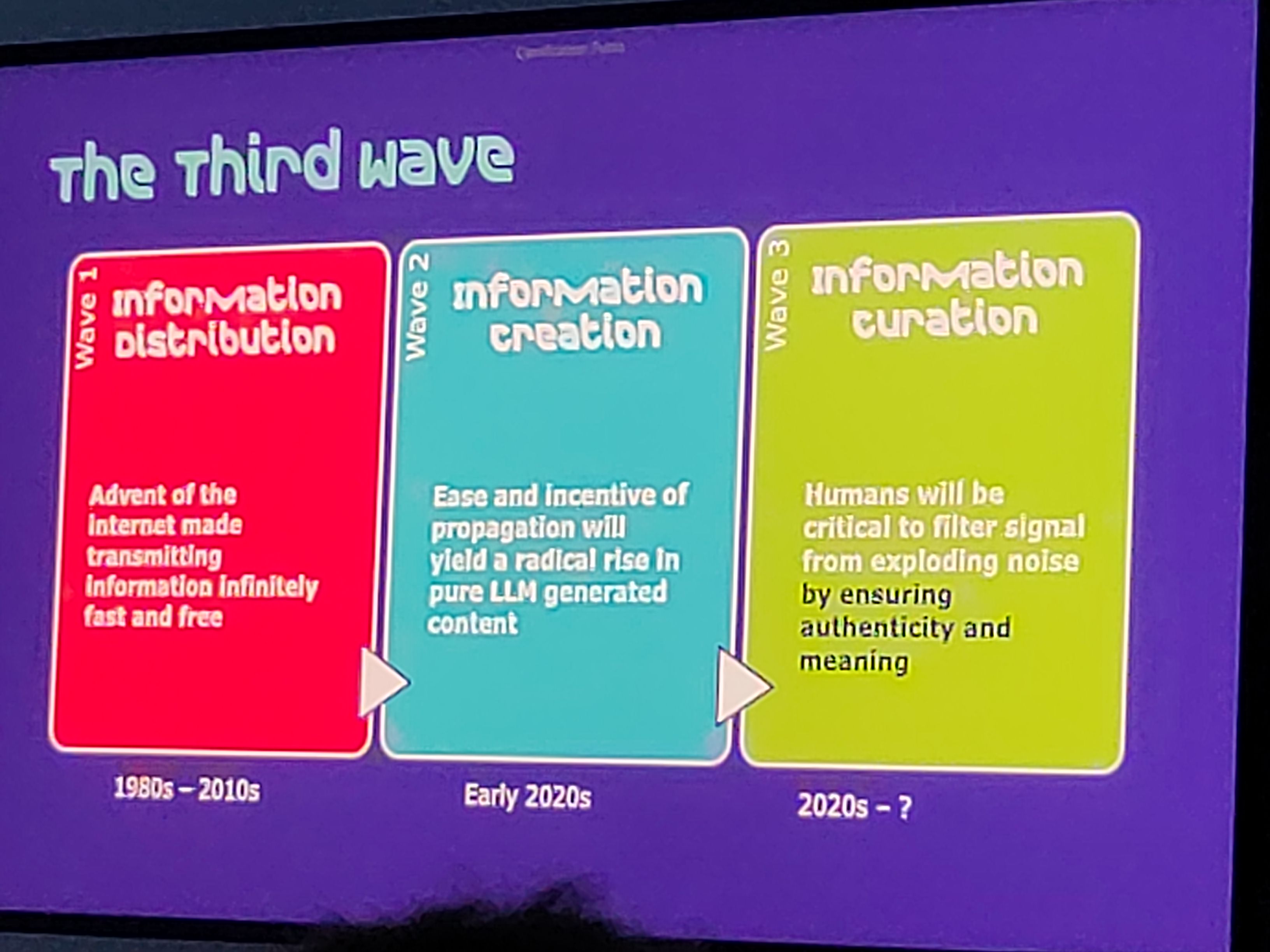
In another talk, titled The Human Factor: Why Human Experts Matter More than Ever in the Wave of Creative Machines, Dr. James Kugler talks about the age of information that started with the onset of the internet. The first wave began with the development of the internet. Currently, we are in the second wave where we see AI dominating every field. AI used to be a tool to analyse signals and extract information faster. However, in this second wave, we see AI as a synthesis tool. We see LLMs being used from writing articles, to generating images, to generating audio and video. As a result, there has been an unprecedented rise in fake news. That is why, Dr. Kugler says that in the next wave, we will see the rise of information curation, where humans will be critical to filtering signals from exploding noise by ensuring authenticity and meaning. That gives me hope that life and AI can survive together.
Life
Whenever it comes to life, the biggest concerns are most of the time about death. One interesting thing that was pointed out in the conference was that, call it a boon or bane but for us Sapiens, the cause of death has completely changed in the last 5000 years. In a hunter-gatherer society cause of death by obesity and cancer was very rare. Even if we see the past 200 years the change is significant. Currently, the biggest challenge in the medical world is to fight cancer. I remember in my childhood days, my doctor uncle used to say that Cancer doesn’t have an answer. But the current generation of scientists is very positive that this mystery could be solved in a few decades.
An interesting talk in this domain was titled Materials Talking to the Cell by Dr. Tanja Weil. The work was an extension of the work done by Dr. Carolyn R. Bertozzi who won the Nobel Prize in Chemistry in 2022. Around 2000, Carolyn Bertozzi started utilising click chemistry in living organisms. She developed bioorthogonal reactions which take place inside living organisms without disrupting the normal chemistry of the cell. Dr. Weil’s team is researching reprogramming cells to form fibres. This can be used to disrupt the existing highways of cancer cells thus disrupting its energy needs. This could be way less painful than Chemotherapy with higher efficacy.
Prof. Sahin also sounded very optimistic in this domain. He said that Antibody Drug Conjugates, or ADCs, are going to replace chemotherapy. He showed research that has the potential to reduce the count of people having cancer by many folds. He said 4 main toolsets are gaining traction to treat cancer. Small medicines, antibodies, cell and gene therapies, and of course his domain of work i.e. mRNA technology. His research team is currently working on the Thereauptic administration of a personalised m-RNA vaccine for cancer patients. They already got a positive result for blood cancer and extended the usage to other types of cancer. With a Goal of 10,000 personalised therapies to reach patients by 2030, UK has collaborated with his team to move immune therapy development closer to the point of care.
As of now, I have only mentioned human life on our planet Earth, a life form that we are accustomed to. However, whenever we look up and see those millions of tiny dots in the clean dark sky, we can’t help but wonder if we are really alone in this Universe. Prof. Loeb says no. In the next section, I’ve covered technology, space and aliens.
Space
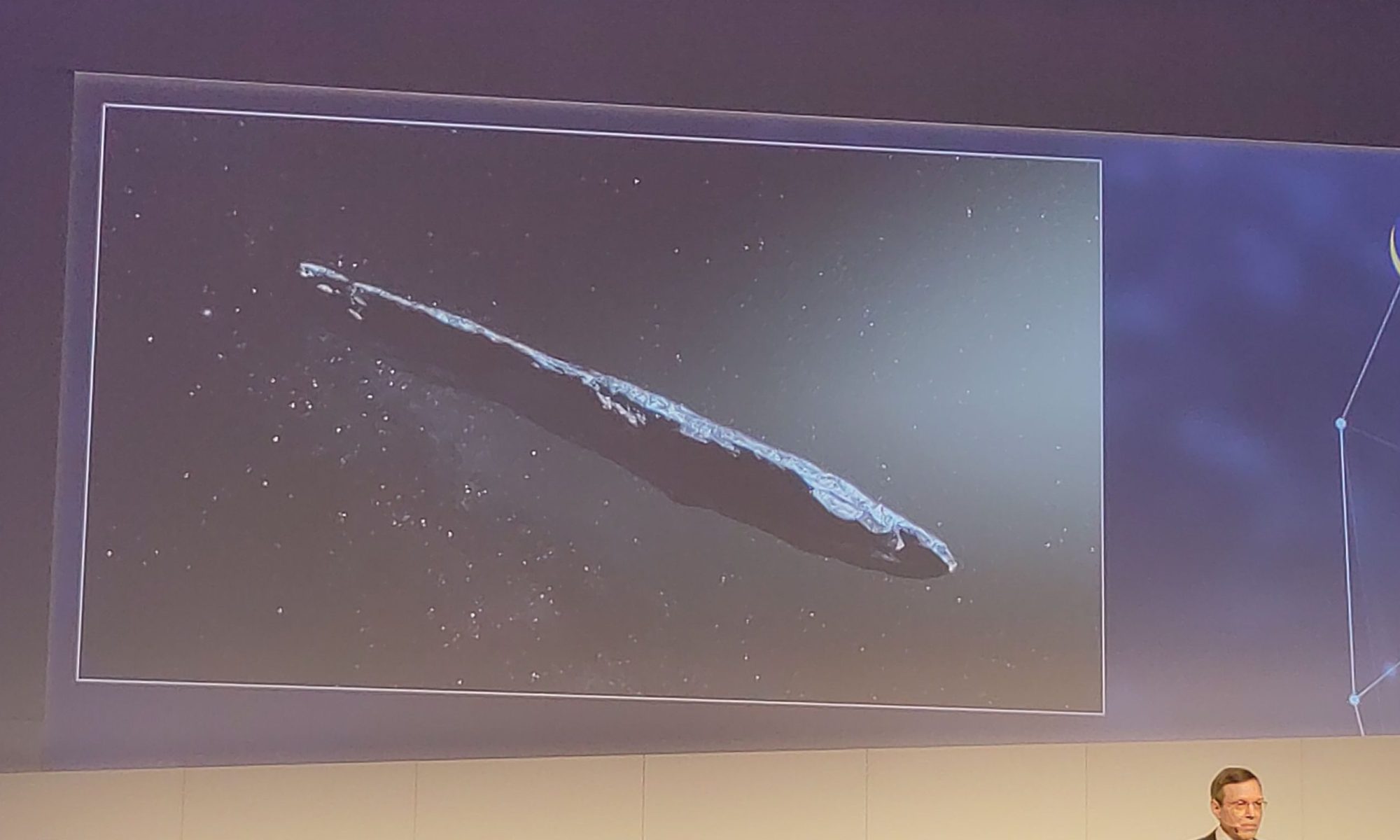
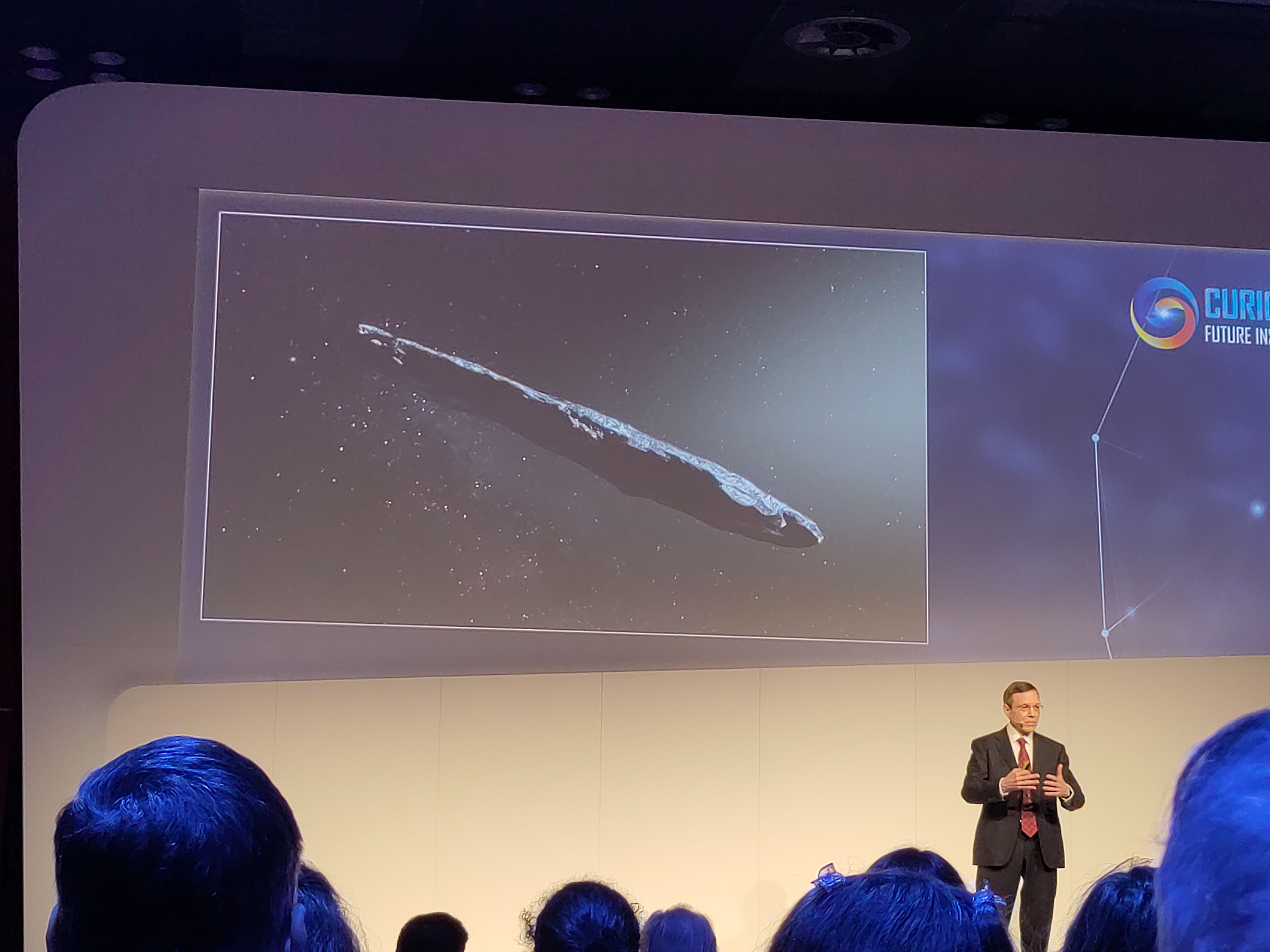
First I would like to start this section with life in space. In the recent past, Oumuamua made a lot of noise in the space sector and one of the key voices has been Prof. Abraham Loeb. Oumuamua was remarkable for its extrasolar origin, high obliqueness, and observed acceleration without an apparent coma. In his talk titled, In search for technological interstellar objects, Porf. Loeb mentions that it could be a part of an interstellar spaceship. Loeb has been very vocal about the prospects of proving the existence of alien life. He has started a non-profit project. The Galileo Project at Harvard University aims to search extraterrestrial technological equipment, which can be considered to be technosignatures. It also includes gathering new data about peculiar UFOs with dedicated optimized unclassified sensor systems to discover the traces of extraterrestrial materials that could once have belonged to aliens.
When it comes to space there are very few talks that can actually beat a complete session by the European Space Agency. It had a keynote speech by astronaut Dr. Thomas Reiter. I could not attend it however I could attend some of the sessions where representatives from the ESA were speaking. Mr. Tim Flohrer Talked about space debris. With the increase in space exploration and military operations, space debris has become a matter of concern. Space debris i.e. parts from past space missions, which are currently not in operation are rotating around the earth as potential hazards. They can collide with other satellites or space crafts leading to disasters and a further increase of space debris. We could also end up in a hypothetical situation, where we are locked out on earth and space missions cannot be conducted because there are too many debris around us. That is why Mr. Flohrer says ESA has strict policies regarding space debris management and all the space agencies across the globe are working together to make space safe.
The space debris are mostly the result of human activities. What if the danger comes from outside? Space weather is the branch of science that is concerned with the varying conditions within the Solar System and its heliosphere. Space weather analysts study and forecast space weather, such as solar flares, geomagnetic storms and particle events. All three can impact human activity. Weather in Space is also in constant flux. An interesting talk on Space weather was by Dr. Melanie Heil. She says, on a milder scale, a geomagnetic storm creates an aurora, but can also cause a variety of highly undesirable consequences. Electrical current surges in power lines, interference in the broadcast of radio, television and telephone signals, and problems with defence communications are all associated with magnetic storms. On September 1–2, 1859, the largest recorded geomagnetic storm occurred. It created strong auroral displays that were reported globally and caused sparking and even fires in telegraph stations. Telegraph systems all over Europe and North America failed, in some cases giving their operators electric shocks. Telegraph pylons threw sparks. Some operators were able to continue to send and receive messages despite having disconnected their power supplies. Another major series of solar storms occurred from mid-October to early November 2003, famously called Halloween solar storms. Numerous other spacecraft were damaged or experienced downtime due to various issues. Dr Heil is working with the European Space Agency, where she is developing a satellite system which will provide the necessary data to allow warning of dangerous solar storms. For all kinds of energy requirements, life on Earth is directly or indirectly dependent on the sun and the next section covers the chitchat around the energy demand of life. But when the energy comes in the form of a powerful geomagnetic storm we must have strategies to mitigate it.
Energy
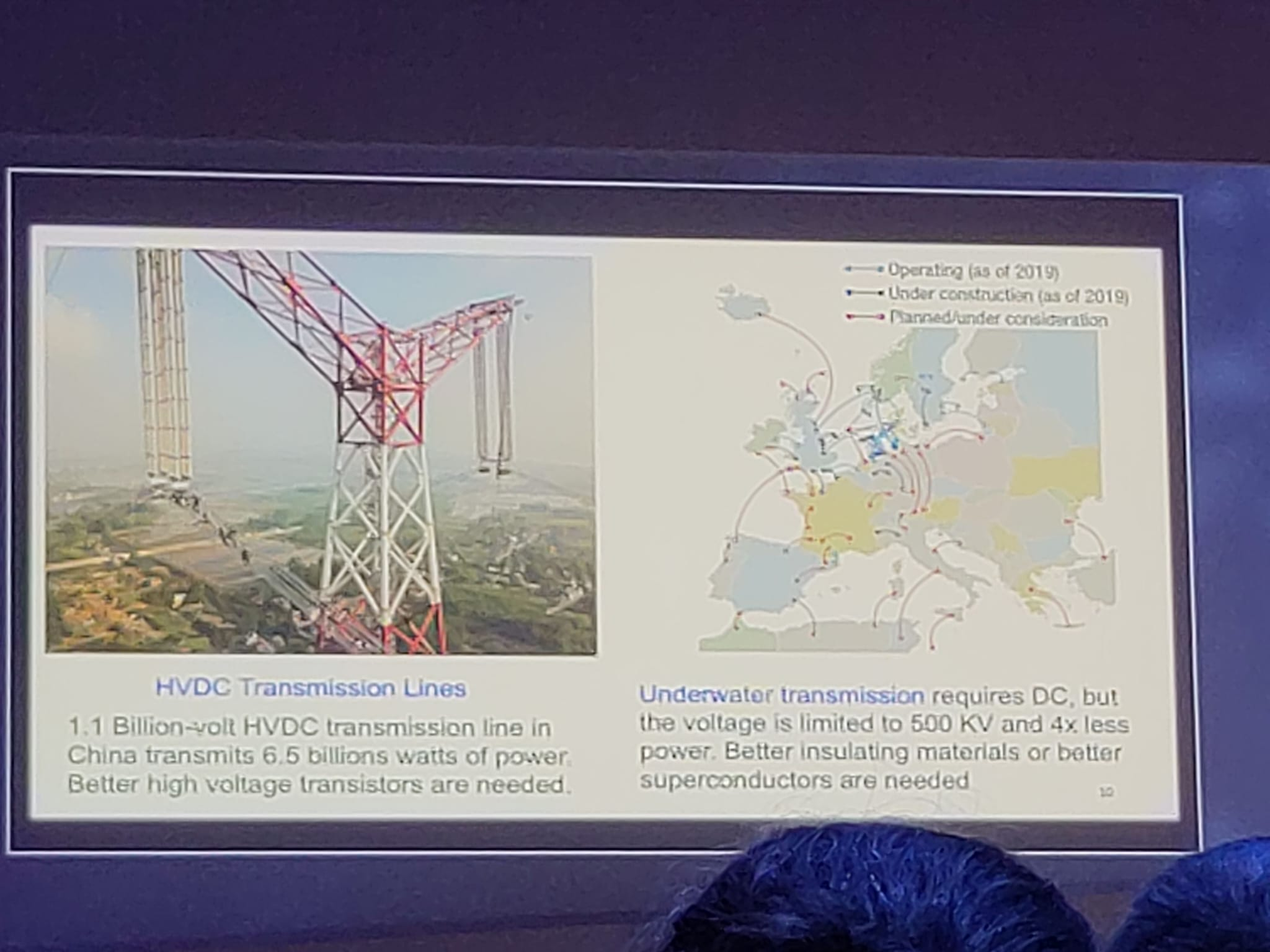
Now, there are two kinds of energy requirements in our modern-day earth. First is the energy required for our functioning, which we get through food. and second, is the energy requirement for our vast plethora of machines. When it comes to Energy for our non-food requirements, we all know what the challenges are. Climate change is the biggest existential threat we face today and the biggest challenge in front of us is how to transition into a non fossil-fuel-based economy. The most talked about renewable source of energy is solar. Professor Michael Graetzel, in his speech, talks about the various advancements in Solar cells. He particularly emphasises the coated solar cells that tend to increase the efficiency of the solar cell. In addition to that, Professor Graetzel mentions that foldable solar panels are also becoming popular. However, the biggest problem with renewable energy is its unpredictability. That’s why there has been a huge focus on energy storage. Nobel Laureate Dr Steven Chu in his keynote titled Materials as an enabling technology in getting to net-zero GHG Emissions mentions the challenges in this sector. One of the key challenges is the usage of precious metals as electrolytes. Additionally, he mentions that as of now the cheapest storage is energy stored in the form of pumped water. Dr Chu also mentions that our power grids need massive upgrades to fulfil the growing demand of modern society. In most cases, the transmission lines are outdated and are simply not capable of transmitting such a high volume of power. Two notable mentions are the HVDC transmission lines on the ground in China that are capable of transmitting up to 1.1 million volts. The second is the 500kilo-Volt underwater transmission lines by the Nordics. If widely adopted, these technologies can transform the grids of tomorrow. In addition to that Dr. Chu also mentions that the advanced energy transmission and storage technologies will take a long adoption time. In the meantime, we need to stop using fossil fuels. Furthermore, he mentions Coal or Natural gas still remains the fallback solution to bridge the renewables gap and contrary to popular belief, the energy from nuclear fission still remains one of the safest sources of energy.
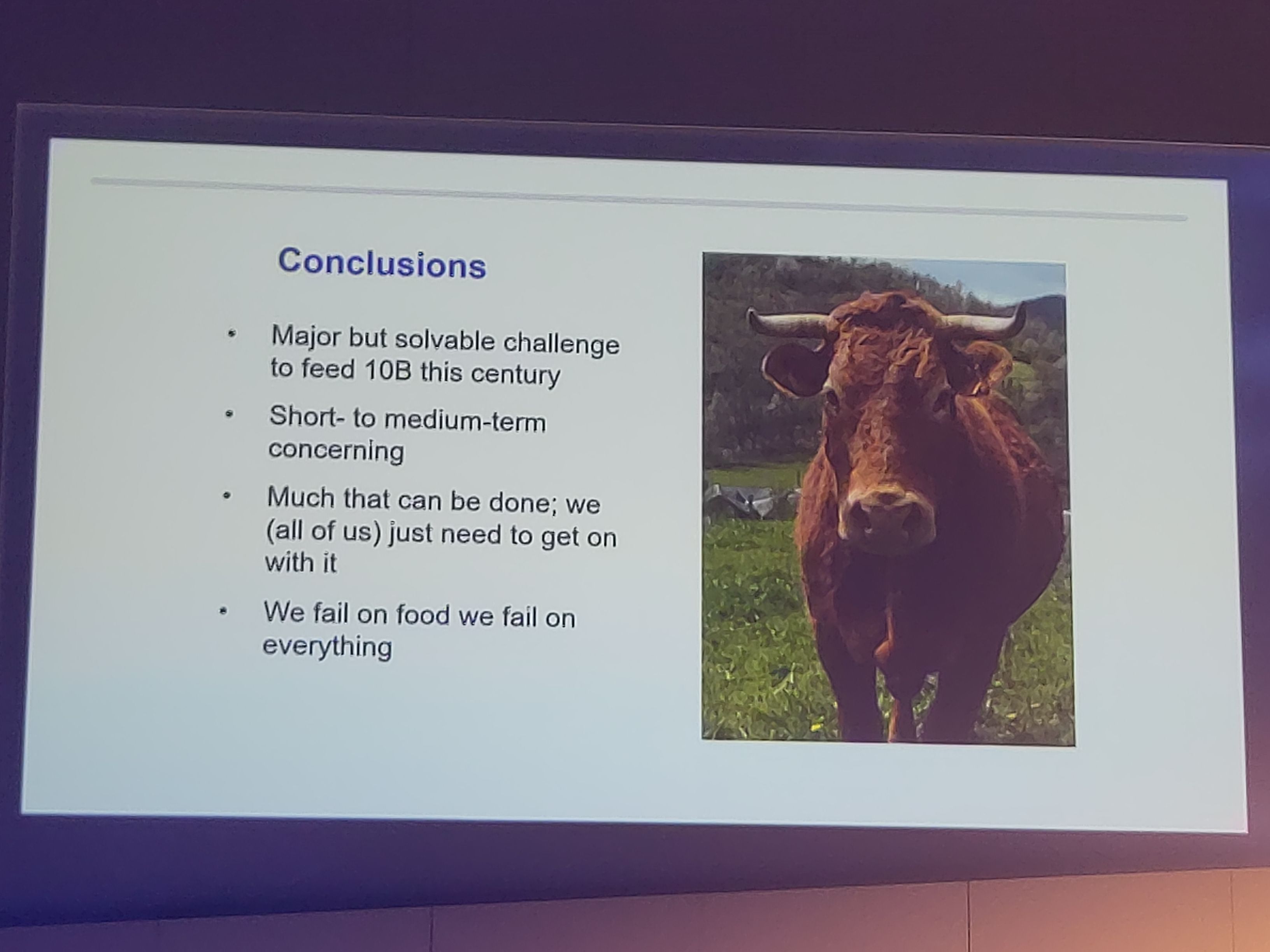
Now the second form of energy need is the energy need of our body i.e. food. In the Keynote speech titled Feeding 10 Billion People Sustainably by Population Biologist Prof. Charles Godfrey from Oxford, he mentions that in the coming decades feeding the entire population is going to be a major challenge. Trends show that there is going to be a 30-50% increase in food demand by mid of the century. Although we have never produced so much in our entire human history, the changing climate is impacting the crop pattern. The agriculture sector itself is one of the biggest contributors to the acceleration of climate change. It is estimated that even if all other sectors become net zero, the agriculture sector alone can cause breaching of the 1.5°C mark if we continue with our current practices. To counter it, we need better crops, the implementation of better fiscal policies and the adoption of novel techniques such as the usage of data, AI and robotics to provide nutrition or to prevent diseases. But it’s not just the climate but the human factor as well that is going to affect it. Food waste has been a major challenge, especially in the ever-growing cities. In addition to that, we are also seeing an epidemic of over-consumption and food price fluctuation due to ongoing global tensions. What I found interesting about Prof. Godfrey’s talk was that most of the problems concerning food are simple and solvable only if we are willing to act.
So that was in short my impression of the global narrative. There were numerous other talks that I didn’t talk about. The complete list of the speakers can be found in this link: Speakers of Curious 2024. The next edition is scheduled to happen in 2027. And I am curious if I will be a part of it or not.
 Jeet Biswas